THE PROBLEM
A client-side React app gives crawlers very little to work with. Every address returned the same HTML shell and relied on JavaScript to fill it in, so eight pages looked like one. I audited my site the way I audit any other.
BEFORE AND AFTER
The audit set the baseline, so every fix could be checked against it.
An empty page, filled in later by JavaScript.
NowFull HTML on every page, with all the text, headings and links in it.
The same title and description on every page.
NowA written title and description for each page.
No sitemap, no robots.txt and no canonical URLs.
NowAll three in place, one address per page, and old URLs sent to the new ones with 301 redirects.
None.
NowJSON-LD for the person, the site and breadcrumbs on every page, plus galleries, the film and each case study.
One image for the whole site and no Twitter tags.
NowOpen Graph and Twitter tags, with a share image made for each page.
Many drawings shared the alt text Drawing, and galleries loaded full-size files as thumbnails.
NowWritten alt text on every image, and each file served at the size the screen needs.
About 4 MB of JavaScript on the home page, and a 103 MB build.
NowAbout 11 KB for the 3D liquid, and a build about half the size.
MY CHOICES
Three decisions mattered more than the rest.
I could have added a pre-rendering plugin to the React site. I moved to Astro instead.
WhyMost of the site is content, so static HTML was the right base, and it fixed speed at the same time.
Web, SEO, UI/UX, posters, film, photography and drawing each have their own address and title.
WhySomeone searching for a developer and someone searching for a film editor should land on different pages.
Every JSON-LD block describes what visitors can see on that page.
WhyThat is what Google's guidelines ask for, and what keeps a site eligible for rich results.
THE RESULT
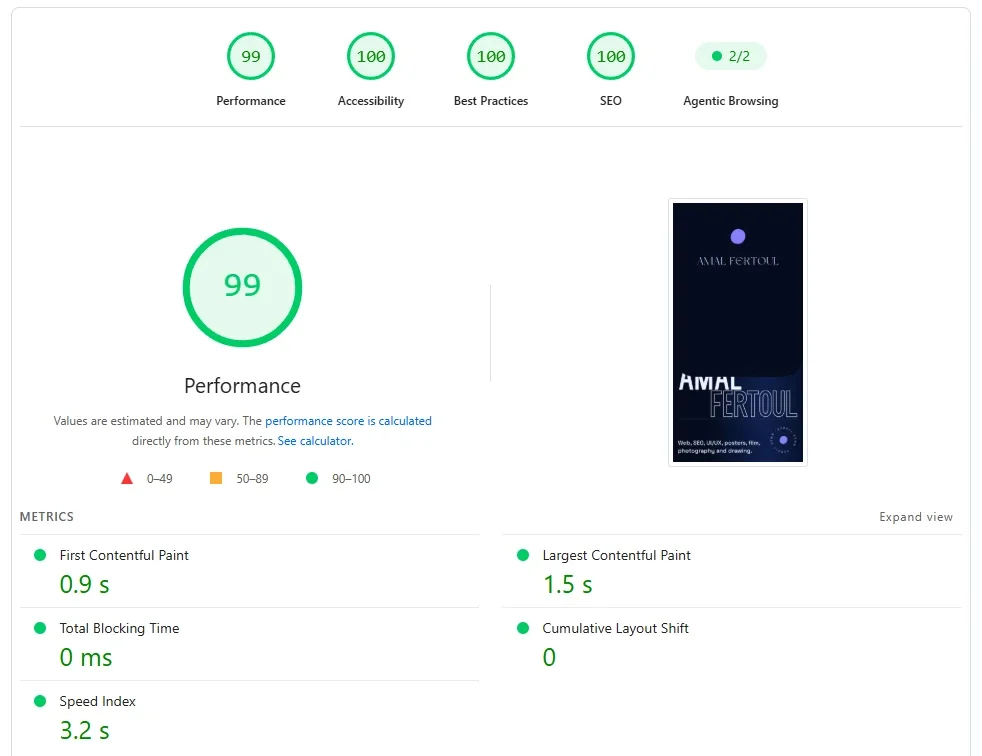
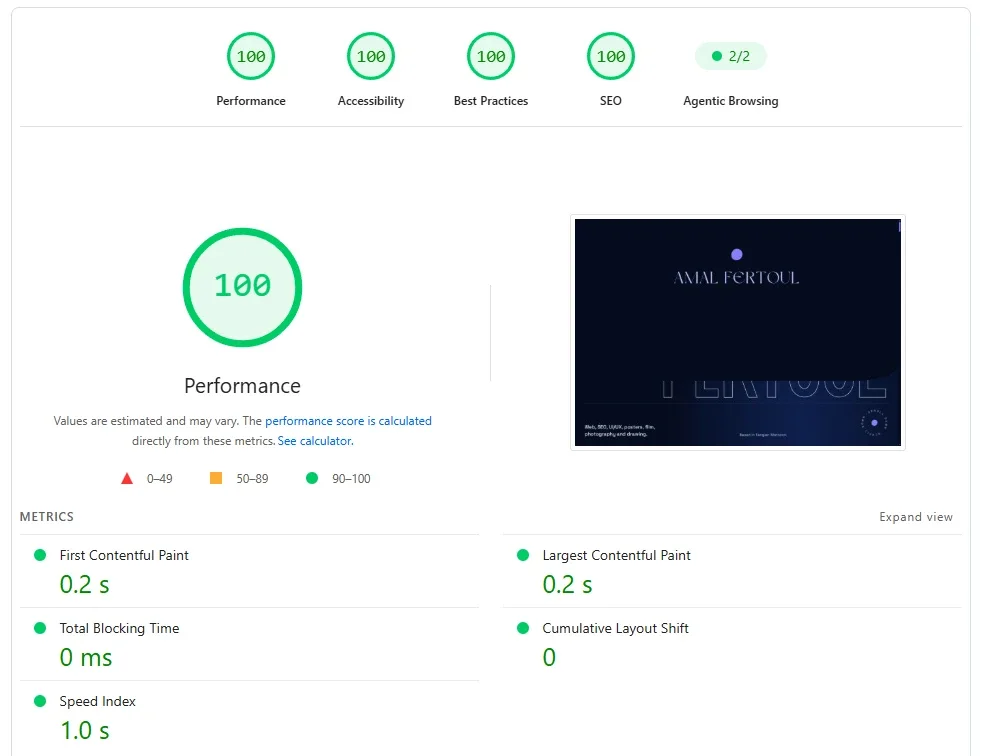
Accessibility also scores 100, performance 99 or more, and layout shift is zero. Every page can be crawled, indexed and shared.